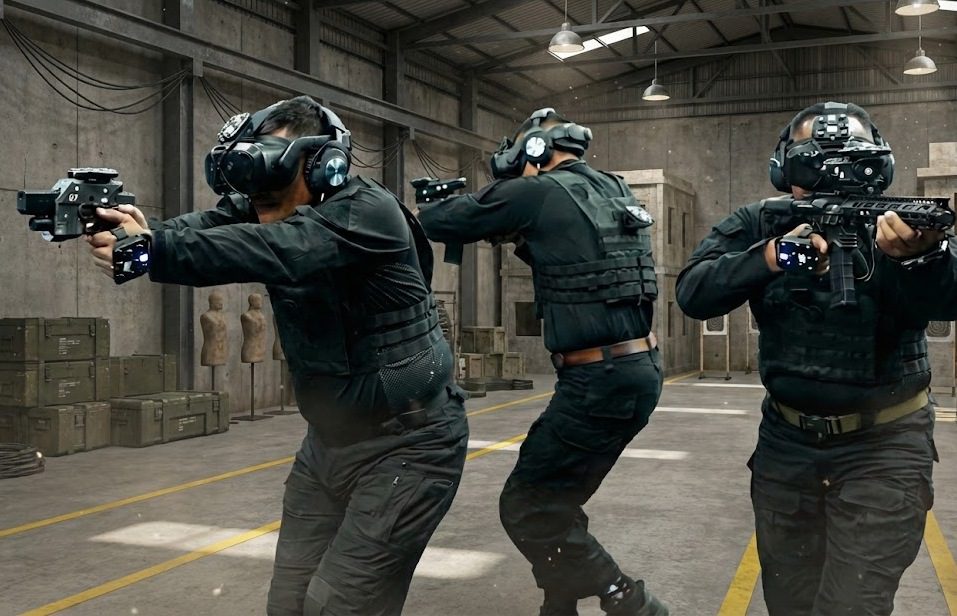
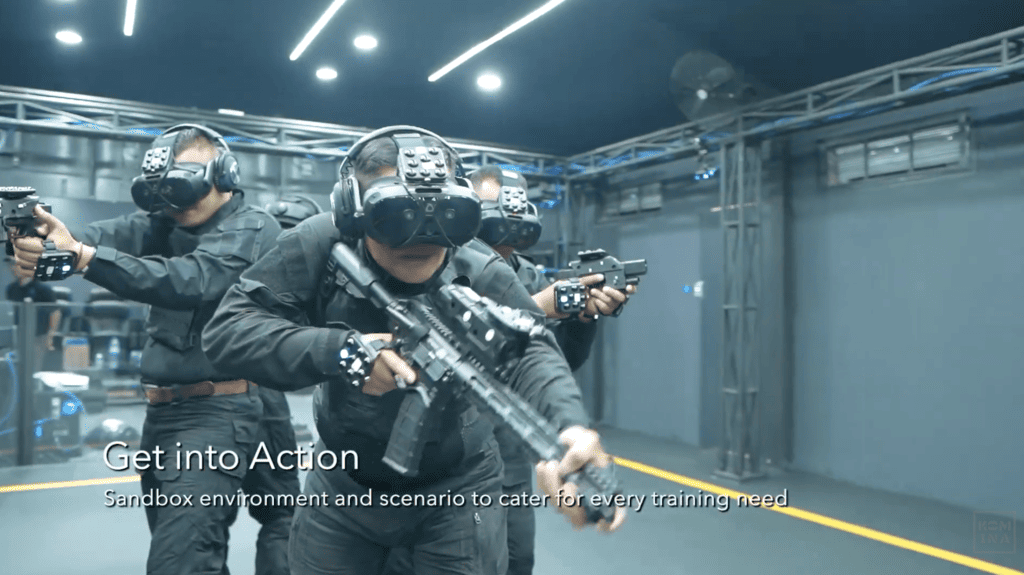
There’s an unglamorous truth about immersive training that vendors rarely lead with: the first time someone puts on a headset, they’re not really training. They’re learning how to exist in VR — how to move, how to interact, how to trust an environment their senses are still arguing with. If a unit drops personnel straight into a demanding tactical scenario on day one, the experience is degraded for everyone, because the trainees are spending their attention fighting the medium instead of the problem. The fix is simple, and skipping it is one of the most common reasons VR programmes underdeliver.
Why the first sessions are wasted without onboarding
For someone who has never used VR, the initial experience is genuinely disorienting. Movement feels strange. Interacting with virtual objects takes conscious effort. Some people feel a moment of physical unease until they adjust. None of this is a defect — it’s the normal process of a brain acclimatising to a new kind of environment. But it means that a trainee’s first exposure is dominated by the mechanics of being in VR, not by whatever the scenario is trying to teach.
If you ignore that and launch straight into a complex, high-pressure tactical exercise, two things go wrong. The training value is lost, because the trainee can’t focus on the tactics while still wrestling with the controls. And the trainee can come away with a poor impression of the whole approach, having experienced it at its most confusing rather than its most useful. First impressions shape adoption, and a bad first session can sour a unit on a tool that would otherwise serve it well.
What a short onboarding step does
The solution is a brief, deliberate familiarisation stage before any serious training. A short onboarding session lets newcomers practise the basics — moving through the environment, interacting with objects, getting comfortable with the headset — in a low-pressure setting with no tactical demands at all. The only goal is to get them past the unfamiliarity, so that when the real training begins, the medium is invisible and their full attention is available for the actual lesson.
Indonesian developer KOMINA builds its training around realistic interaction and immersive environments, and the same principle applies to getting people started: competence in the medium has to come before competence in the scenario. A well-designed onboarding step is short, but it pays for itself immediately, because every session afterwards is spent training rather than acclimatising.
Adoption is a human problem, not just a technical one
There’s a broader point here about rolling out any new training technology. The hardware can be excellent and the scenarios well-built, and the programme can still stall if the people using it aren’t brought along thoughtfully. Treating the first contact with VR as a deliberate, supported step — rather than assuming everyone will just figure it out — is the difference between a unit that embraces immersive training and one that quietly resists it. The technology succeeds or fails partly on how it’s introduced.
The limit
Onboarding doesn’t make anyone a skilled operator; it just removes the barrier between them and the training that will. And a smooth first session doesn’t guarantee a good programme — the scenarios, the instruction, and the follow-through still have to be right. Familiarity with the headset is the start of the work, not the substance of it.
But it’s the start that everything else depends on. By getting newcomers comfortable in the medium first, a unit ensures its immersive training is actually spent training — and that the people using it come away convinced rather than confused.
The headset is only a barrier until it isn’t. The fastest way to a unit that trusts VR is to get them past that first hour deliberately, not by accident.