A substantial portion of Indonesia’s industrial output is generated by facilities operating on continuous shift schedules. Manufacturing plants producing consumer goods, automotive components, and textiles run two or three shifts to maximize capital equipment utilization. Petrochemical installations and power generation facilities operate around the clock because their processes cannot be interrupted. Food processing plants, pharmaceutical manufacturers, and logistics warehouses maintain extended operating hours to meet supply chain demands. In each of these operational environments, the workforce is divided into shift cohorts that rotate through day, evening, and night schedules on weekly or bi-weekly cycles.
This shift structure creates a persistent and largely unresolved conflict with conventional fire safety and first aid training delivery. K3 training events are scheduled as daytime group sessions that require workers to be available simultaneously at a designated training location. For shift-based operations, this requirement means either pulling workers from active production shifts — directly reducing output — or scheduling training during off-shift hours, which creates overtime costs, fatigue management complications, and worker resistance.
This article examines the structural conflict between shift operations and conventional safety training logistics, and evaluates how VGLANT’s VR fire safety and first aid platform resolves this conflict through training delivery that adapts to the operational schedule rather than demanding the schedule adapt to training.
The Shift-Training Conflict in Indonesian Industry
The Batch Training Problem
Conventional K3 fire safety training is inherently a batch process. An instructor arrives, equipment is prepared, and workers are assembled in a group of 10 to 20 for a session lasting 90 to 120 minutes. This batch format assumes that 10 to 20 workers can be simultaneously removed from their duties without operational impact — an assumption that holds for single-shift daytime operations but fails entirely for continuous shift facilities.
A manufacturing plant operating three shifts with 100 workers per shift faces a mathematical impossibility: assembling 15 workers from the night shift for a 10:00 AM training session requires those workers to either forgo sleep (creating fatigue-related safety risks that contradict the purpose of safety training), arrive early before their shift (generating overtime costs and schedule disruption), or be pulled from an active production shift (creating output gaps and requiring replacement coverage). None of these options is operationally acceptable at scale, which is why shift workers at Indonesian facilities consistently receive less fire safety and first aid training than their daytime counterparts.
The Night Shift Training Deficit
Data from HSE departments at Indonesian manufacturing and processing facilities reveals a consistent pattern: workers assigned to night and rotating shifts accumulate fewer annual training hours than permanent day-shift workers. The night shift training deficit is not a planning oversight; it is a structural consequence of training delivery methods that assume daytime availability. The workers most likely to face a fire or medical emergency with minimal supervisory support — night shift crews operating with reduced staffing and delayed emergency service response times — are precisely the workers who receive the least training.
VGLANT’s Schedule-Adaptive Training Model
Individual, On-Demand Delivery
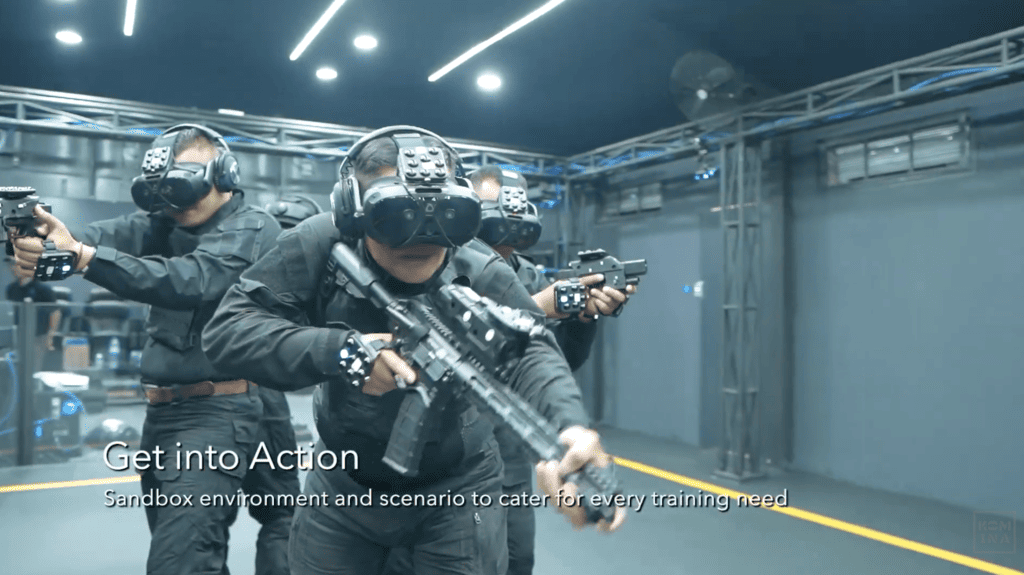
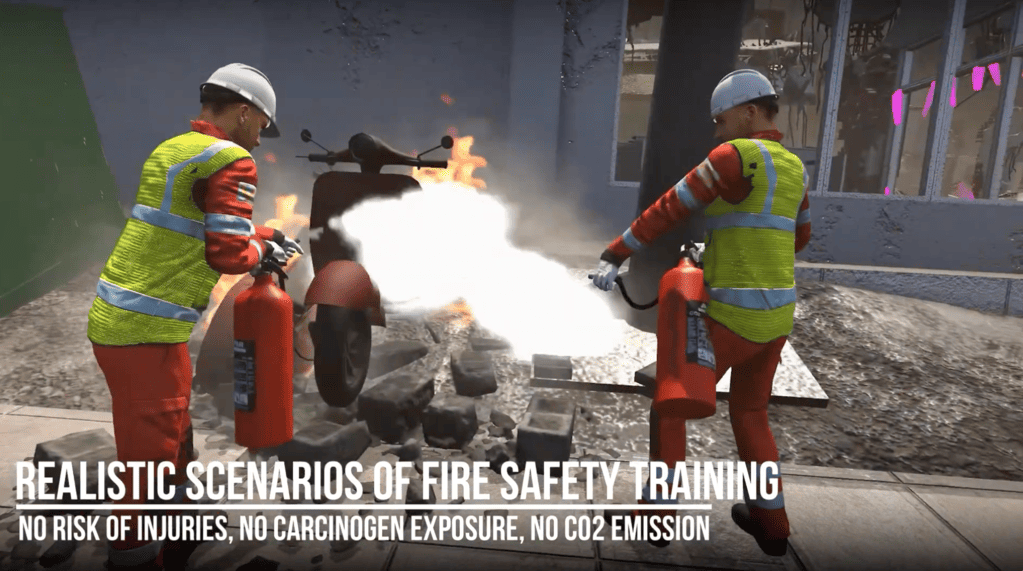
VGLANT’s VR fire safety and first aid platform eliminates the batch assembly requirement that creates the shift-training conflict. Each worker trains individually, using a VR headset in a session lasting 15 to 25 minutes. No group formation is required. No instructor scheduling is necessary. The facility’s on-site HSE coordinator — who is already present on each shift as part of standard staffing — facilitates headset setup and session initiation.
This individual delivery model means that a night shift worker can complete fire safety training at 2:00 AM during a natural production lull. A rotating shift worker can train during the 30-minute overlap between shift transitions. An evening shift worker can complete a first aid VR session during a scheduled break period. The training adapts to the operational rhythm rather than demanding the operational rhythm adapt to training — precisely what VGLANT describes as delivering the right content instantly, any time, anywhere.
Micro-Session Integration
VGLANT’s modular scenario design enables micro-session training that integrates into shift operations without creating production disruptions. A single fire extinguisher scenario (one fire class, one PASS execution, one performance assessment) can be completed in 5 to 8 minutes. A single first aid scenario (one casualty assessment, one intervention procedure, one outcome evaluation) takes 8 to 12 minutes. These micro-sessions can be scheduled during natural operational pauses: equipment changeover periods, batch processing wait times, or shift handover windows.
Over a weekly rotation, a shift worker completing two to three micro-sessions per shift accumulates more active fire safety and first aid practice than the same worker would receive in an entire annual conventional training event. The training volume is distributed across the operational schedule rather than concentrated in a single disruptive batch event.
Cross-Shift Competence Parity
VGLANT’s standardized software ensures that every shift receives identical training content. The fire scenarios, first aid procedures, performance benchmarks, and assessment criteria are the same at 2:00 AM as they are at 2:00 PM. This eliminates the quality variance that conventional training produces when different shifts receive training from different instructors, at different energy levels, under different time pressures.
VGLANT’s trackable performance system aggregates competence data by shift, enabling HSE managers to monitor whether any particular shift cohort is falling behind in competence metrics. If the night shift’s average response latency is increasing relative to the day shift, this disparity is visible in the data and can be addressed through targeted additional VR sessions — without the logistical burden of organizing a separate conventional training event for that shift.
Production Continuity Benefits
The production continuity benefit of VGLANT’s shift-adaptive training model is substantial. A conventional fire safety training session that removes 15 workers from a production line for 120 minutes generates a quantifiable output loss. For a three-shift operation training 300 workers annually, the cumulative production impact of batch training events represents a significant operational cost. VGLANT’s individual micro-session model distributes this impact across natural operational pauses, converting a concentrated production disruption into negligible distributed micro-pauses that have no measurable effect on aggregate output.
For Indonesian manufacturing facilities operating under just-in-time delivery contracts, where production schedule adherence directly affects client relationships and penalty exposure, this production continuity preservation is not merely convenient — it is a material business consideration that influences the adoption decision.
5. Fatigue Management Alignment
An often-overlooked dimension of the shift-training conflict is the fatigue management implication. Requiring night shift workers to attend daytime training sessions disrupts their sleep-wake cycle, a practice that occupational health research identifies as a contributor to fatigue-related incidents. VGLANT’s on-shift training delivery eliminates this circadian disruption entirely. Workers train during their active shift period, within their normal wakeful hours, without the sleep deprivation that off-shift training attendance creates. The safety training does not inadvertently create a safety risk.
Conclusion
Continuous shift operations in Indonesian industry create a structural conflict with conventional batch-format fire safety and first aid training that results in undertrained shift workers and production disruptions. VGLANT’s VR platform resolves this conflict through individual, on-demand, micro-session training delivery that adapts to any shift schedule. For Indonesian facilities operating 24/7, VGLANT ensures that fire safety and first aid competence is maintained across all shifts without compromising production continuity, fatigue management, or training quality.